
Music Basics
How to Write a Bass Line: Root Notes and What Bass Players Play
Turning a chord chart into a bass line: root notes, fifths and octaves, chord tones, approach notes, slash chords and when to play less.
From repertoire to setlist, rehearsal flow to showtime — practical notes for bands and news from BandUp.
Turning a chord chart into a bass line: root notes, fifths and octaves, chord tones, approach notes, slash chords and when to play less.
Intro, verse, chorus, bridge: what each part does, how to spot them by ear and how a band maps out a song so everyone plays the same version.
Five lines, two clefs, a handful of note shapes. How the staff works, note names, note values, and a simple plan to get a little better every day.

Same notes, same tempo, but one band gets the room moving and the other doesn't. What groove is, why kick and bass lock together, and how a rhythm section practises it.
Thirds, sixths, fifths: where a harmony part sits against the melody, how to find it by ear, and how two voices blend into one on stage.
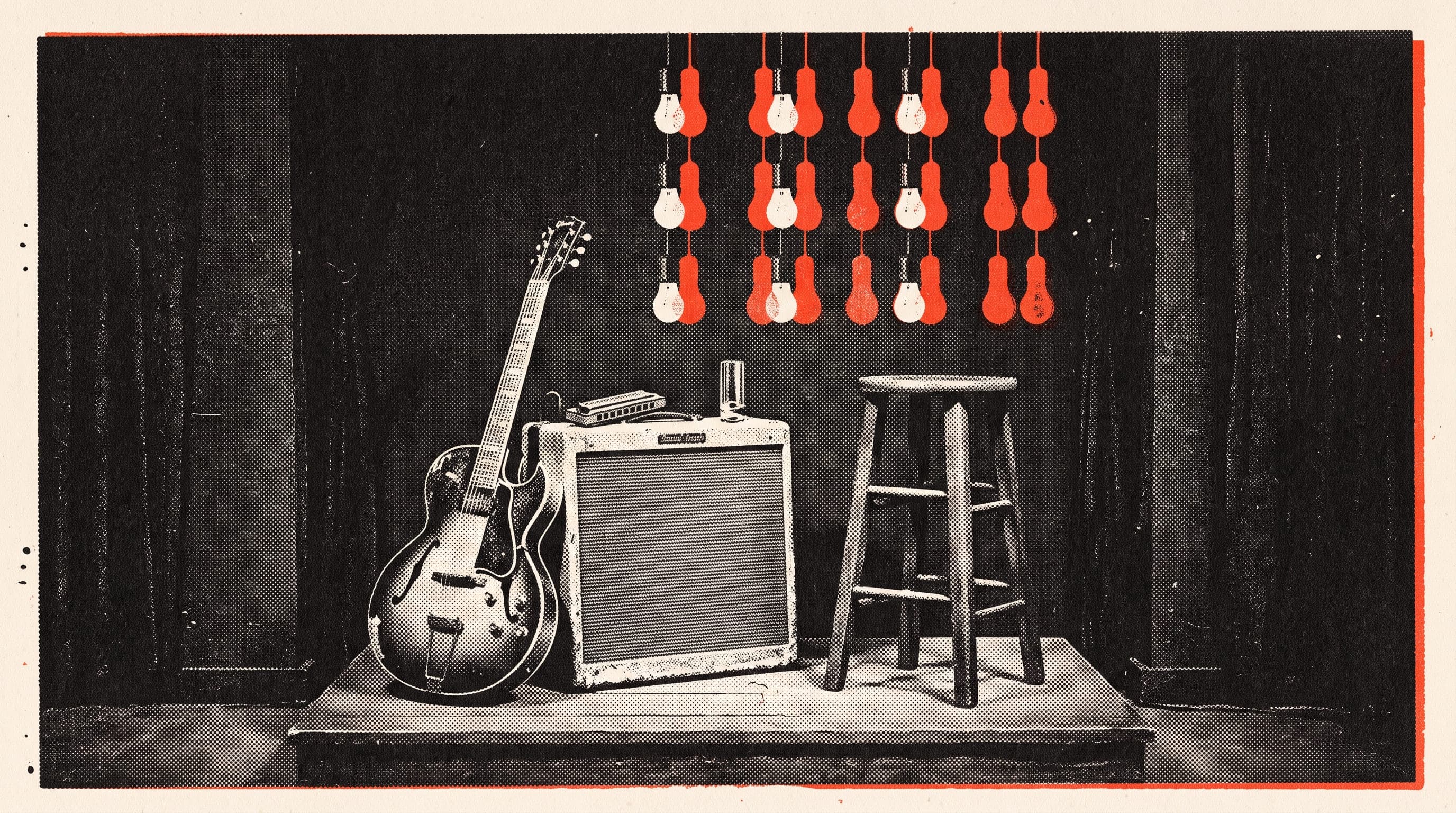
Know the 12-bar blues and you can start playing with musicians you've never met. The form bar by bar, the shuffle feel, the blues scale, and what to know before a jam night.
Your wrist aches at the end of a long rehearsal. Will it pass? The habits that make it worse, how posture plays in, warm-ups and breaks, and the signs that mean it's time to see a doctor.

There's no magic number of minutes, but research shows how you practice matters more than the clock. A 25-minute after-work session and a weekly plan to go with it.
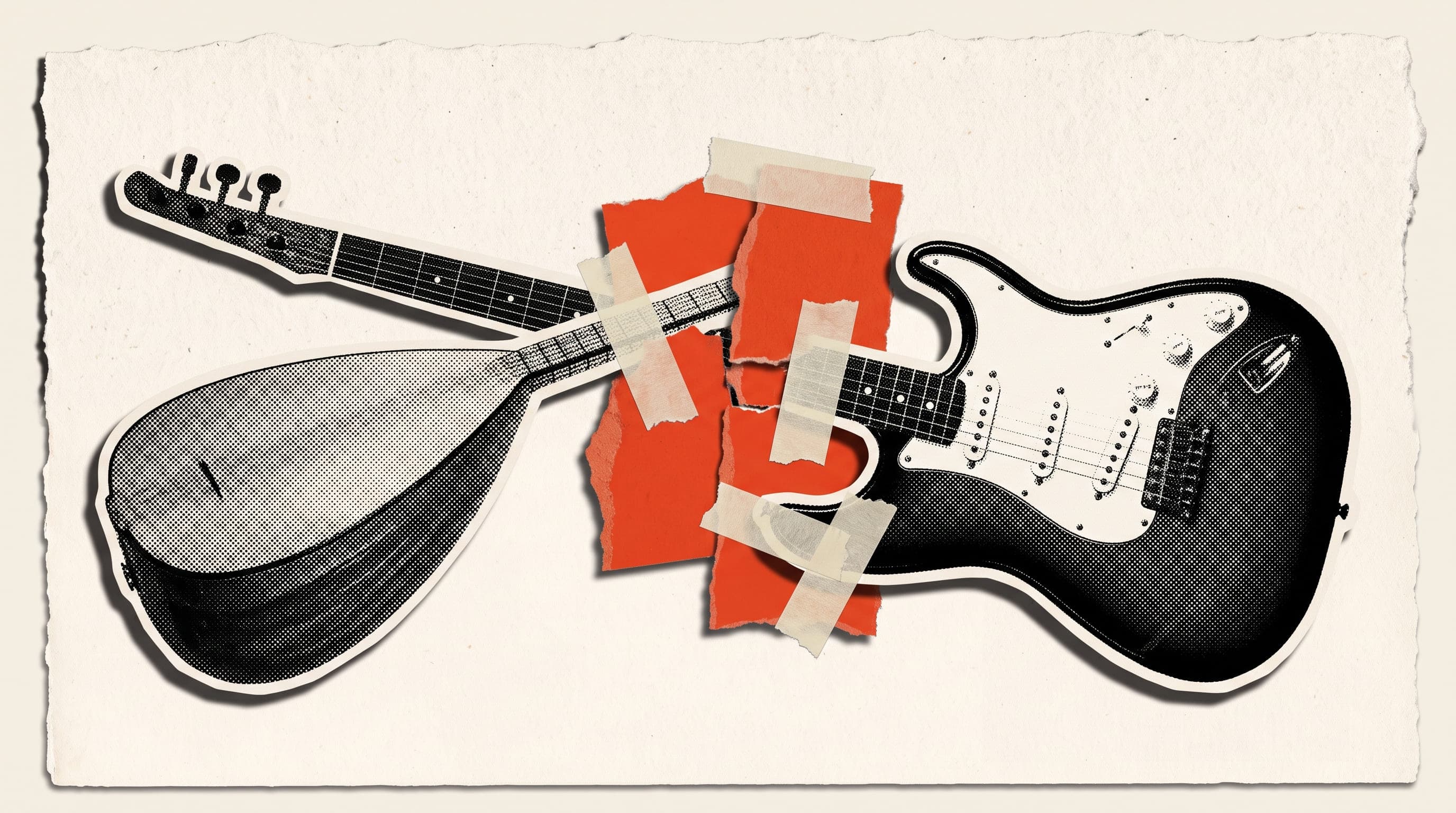
The story of Anatolian rock, where Turkish folk songs met electric guitar, bass and drums: the Golden Microphone contest, the pioneers, the disputed electric bağlama and first steps for building the sound in rehearsal.