
Chord Inversions Explained: How to Voice Chords on Keys
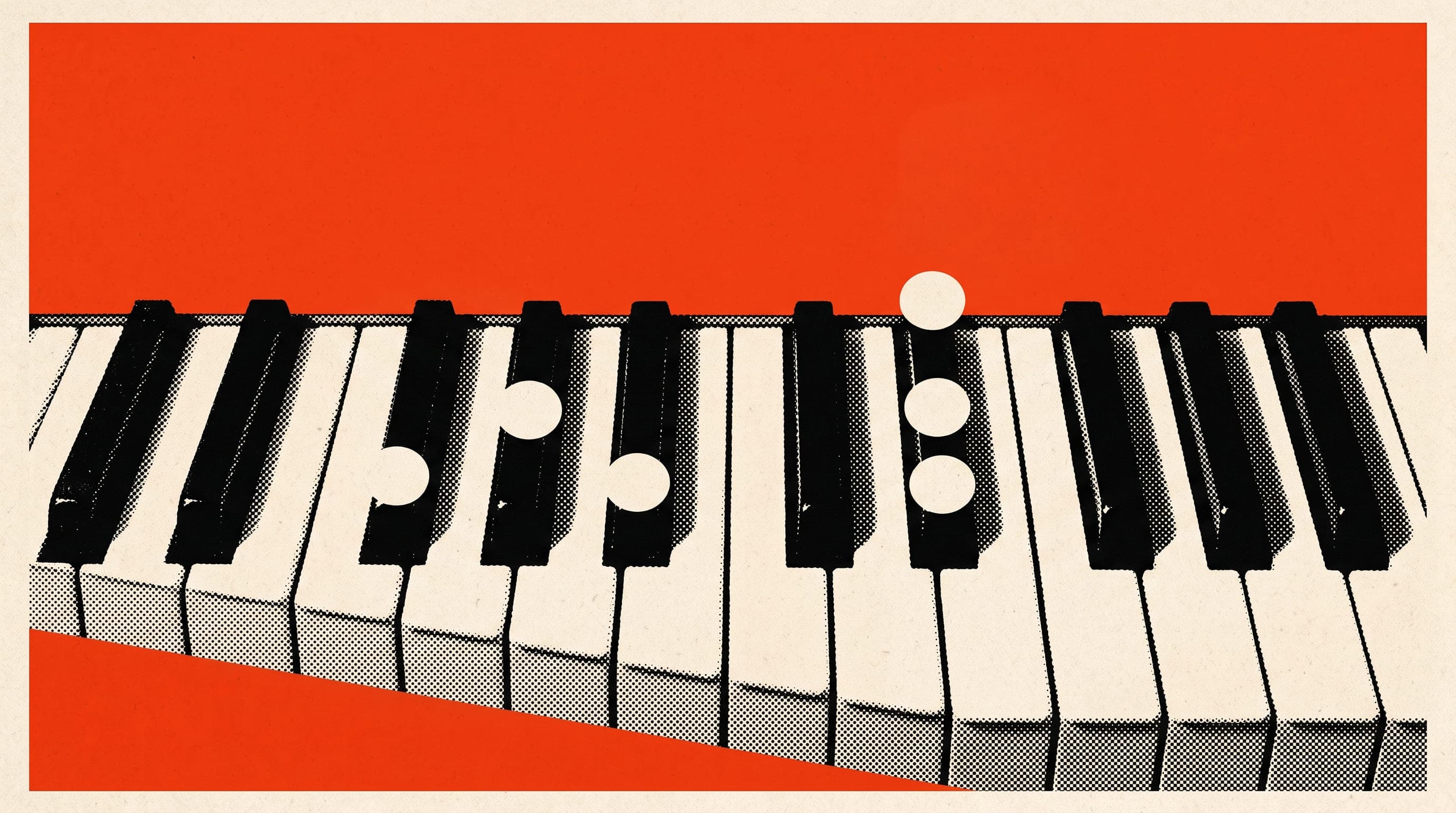
Play C, E and G from the bottom up and you're playing a C chord. Play the same three notes with E at the bottom and it's still C, but now it's an inversion. A chord inversion keeps the chord's notes and changes which one sits lowest. That's why the same chord can be played in several places on the keyboard, each with a slightly different colour.
The keyboard player moves from C to G, then Am, then F, and jumps from one end of the keyboard to the other on every chord. The chords are right, but the changes sound choppy. On top of that, the left hand wanders into the bass register, clashes with the bass player and muddies the band's low end. Knowing your inversions fixes both problems at once.
What is a chord inversion, and how is it different from root position?
A chord is in root position when its lowest note is the root. For C, that's C at the bottom with E and G above. Alongside root position, a three-note chord has two inversions:
- First inversion: The third is at the bottom. For C, that's E.
- Second inversion: The fifth is at the bottom. For C, that's G.
Finding an inversion is simple: move the bottom note up an octave. Take the C from C, E, G up top and you get E, G, C, the first inversion. Move the E up and you get G, C, E, the second inversion. If chord symbols trip you up, go back to reading chords first.
How do you play first and second inversions on keys?
Here are the inversions of the four chords you'll meet most in pop. Notes are listed from bottom to top:
| Chord | Root position | 1st inversion | 2nd inversion |
|---|---|---|---|
| C | C, E, G | E, G, C | G, C, E |
| G | G, B, D | B, D, G | D, G, B |
| Am | A, C, E | C, E, A | E, A, C |
| F | F, A, C | A, C, F | C, F, A |
In root position, the notes stack in thirds. In the inversions, a fourth appears between two of the notes, which changes the shape of your hand. Play each inversion on its own first, then the three shapes of the same chord back to back, and your hand gets used to them.
The three shapes don't sound the same either. Root position is the most solid and settled, which is why a song's final chord is usually in root position. First inversion feels lighter and more on the move. Second inversion sounds more suspended and usually works as a brief stop on the way from one chord to the next. Listening for that difference as you play makes it easier to decide which inversion to use where.
What's a third inversion on a seventh chord?
Seventh chords have four notes, so there's one more inversion. G7 is G, B, D and F. First inversion puts B at the bottom, second puts D, and third puts the seventh, F, at the bottom.
Classical harmony books label these with figures: 6 and 6/4 for triads, 6/5, 4/3 and 4/2 for sevenths. Pop and rock charts rarely use that notation. Slash chords take its place.
Are slash chords like C/E the same as inversions?
Most of the time, yes. A slash chord shows the chord on the left of the slash and the lowest note to play on the right. C/E is a C chord with E at the bottom, which is C's first inversion. C/G is the second inversion.
But not every slash chord is an inversion. If the note on the right isn't in the chord, like C/D, it's not an inversion but a new bass note added under the chord. The rule: if the note on the right is part of the chord, the chord is inverted.
Why does moving to the nearest inversion help?
When each note takes the shortest path to a note in the next chord, that's called voice leading. Inversions make it possible. Instead of playing every chord in root position, pick the inversion closest to the previous chord and your hand barely moves.
Going from C to F to G, for example, play C in root position (C, E, G), F in second inversion (C, F, A) and G in second inversion (D, G, B), and no finger moves more than a whole step. Shared notes stay put, and the ear hears the change as one smooth line.
How do you play C, G, Am and F smoothly with inversions?
Let's apply the same idea to one of the best-known pop progressions. Picking the inversion closest to the previous chord in the right hand gives you:
- C, root position: C, E, G.
- G, first inversion: B, D, G. C drops a half step, E drops a whole step, G stays.
- Am, first inversion: C, E, A. Every note moves up a step.
- F, second inversion: C, F, A. C and A stay, only E moves up a half step.
Across all four chords, your hand stays in the same small area of the keyboard. The same idea works in the bass too: in C, G/B, Am, F, the lowest notes go C, B, A, F, stepping down almost note by note. Why this progression and its cousins show up so often is its own topic: common chord progressions.
Where should a keyboard player put chords in a band?
A solo pianist plays the root low in the left hand. In a band, that register belongs to the bass player. If the keys player's left hand heads down there too, the two instruments clash in the same range and the low end turns to mud.
- Keep the left hand up. A common tip is to keep it between middle C and the octave below.
- Leave the root to the bass. Since the bass player already has the root, the left hand can skip it and play just the notes that give the chord its colour, like the third and seventh.
- Don't pile up with the guitar. If the guitar is strumming in the middle register, playing the chord a bit higher or in a different inversion on keys makes room for both.
- Play fewer notes. Plenty of keys players get by with three or four notes across both hands in a band. Playing everything doesn't always sound fuller.
Writing down which inversion you use in which song is the easiest way to keep the same sound from rehearsal to rehearsal. In BandUp you can put that in the song's personal notes. Personal notes are visible only to you, and they show up in Stage Mode alongside the song's lyrics and chords, without opening any menu.
When a song changes key, the inversions need rebuilding in the new key too. The basics of changing key are in what is transposing.