
Ringing Ears After Rehearsal: What to Do When It Won't Stop
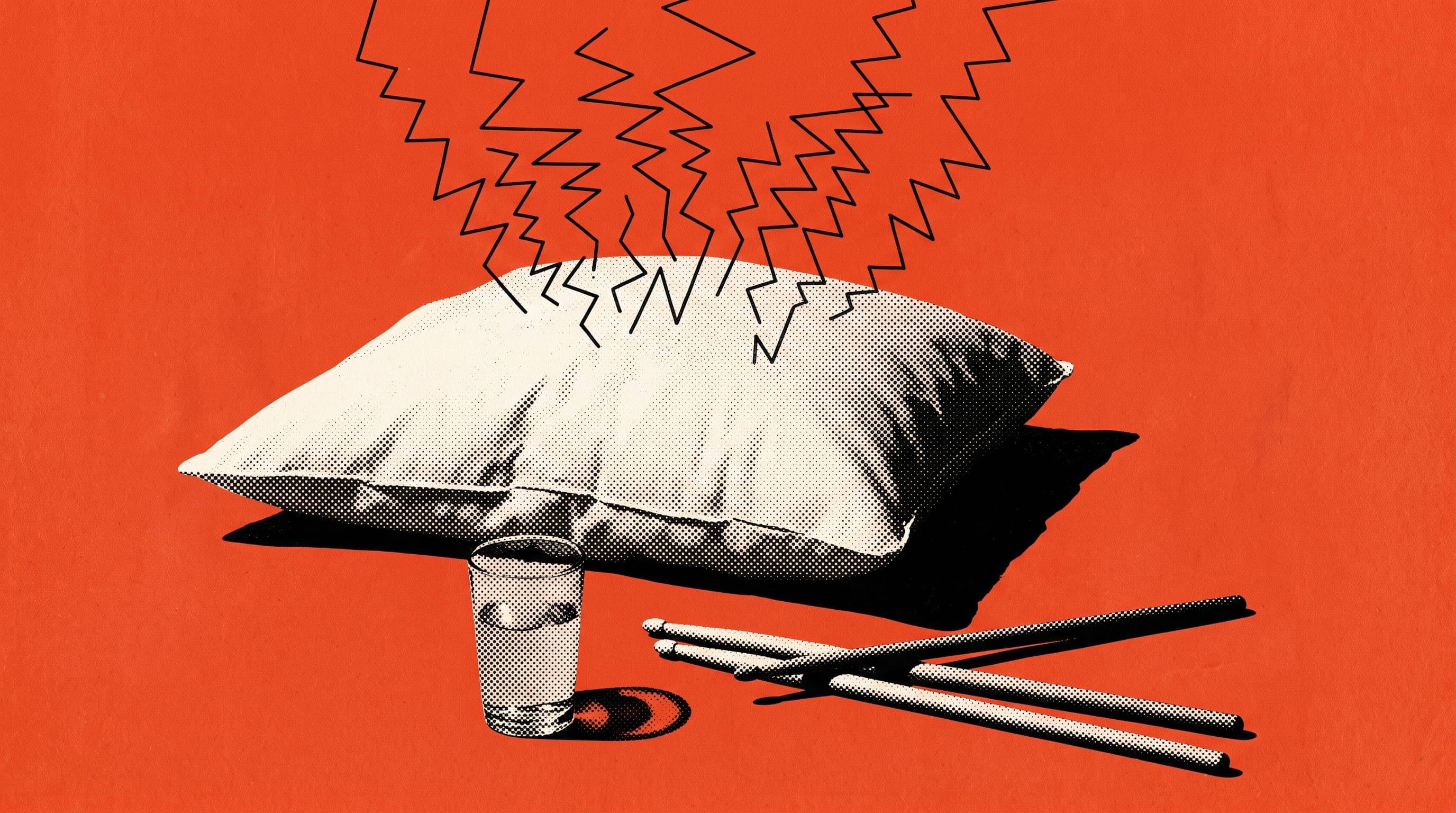
That ringing, buzzing or humming you hear when there's no sound around you has a medical name: tinnitus. According to the US National Institute on Deafness and Other Communication Disorders (NIDCD), 10–25% of adults have it, and many people notice some temporary ringing after a concert. Usually it fades. But “it went away” doesn't always mean “it left no mark.”
Rehearsal's done, gear's packed, you get in the car. In that quiet moment before the engine starts, there's a thin, high tone in your ears. Before you're home, a message pops up in the band chat: “Are your ears ringing too?” Two people reply “same,” someone sends a laughing emoji, and that's the end of it. Sound familiar?
Why do your ears ring after rehearsal?
Loud sound. The NIDCD says noise exposure can trigger tinnitus, which may go away or may stick around. The same source says long or repeated exposure to sounds at or above 85 dBA can cause hearing loss. dBA is a decibel scale weighted to match how sensitive the ear is. Concerts can reach 94–110 dBA.
The same page adds that loud noise sometimes causes a temporary hearing loss that disappears within 16 to 48 hours. That's why everything can sound muffled for a while after rehearsal.
If it's gone by morning, are your ears fine?
Not necessarily. The NIDCD states plainly that temporary hearing loss can fade within 16 to 48 hours while long-term, permanent damage may still remain. NIOSH, the US occupational safety institute, lists ringing ears or muffled sound after leaving a noisy place as a sign you've been overexposed.
So the ringing is a warning. When it stops, the warning hasn't been cancelled. It's just gone quiet.
Ringing that sticks around doesn't follow one path either. According to the NIDCD, tinnitus can get better over time, or worse. So instead of “let's give it a day or two,” it helps to know which sign calls for what; we've listed them below.
How loud does a rehearsal room get?
There's no single number that fits every rehearsal room. But there are measured examples:
- In a study that measured a rock band, the average level over a two-hour rehearsal was 90.0–96.4 dBA, and 94.0–102.8 dBA over a four-hour gig. It was a small study, done on a single band.
- Among 16 amateur pop/rock musicians, informal measurements near the ear during rehearsal came out around 100–105 dBA.
- In a study of 44 professional pop, rock and jazz musicians, 31.8% had tinnitus. Of the 10 drummers in that study, 80% had tinnitus and 40% had hyperacusis, an oversensitivity to sound. That's only ten drummers, but the picture is clear. Weekly playing hours also added to hearing loss.
Every sound level on that list is above 85 dBA, the level the NIDCD says can cause hearing loss with long or repeated exposure. The numbers can look close together. But as the table below shows, a few decibels can mean hours of difference in safe time.
How long is considered safe?
NIOSH recommends a limit of 85 dBA averaged over an 8-hour workday. Every time the level goes up by 3 dBA, the safe time is cut in half. Worked out with that rule, it looks like this:
| Average level | Recommended maximum (per day) |
|---|---|
| 85 dBA | 8 hours |
| 88 dBA | 4 hours |
| 91 dBA | 2 hours |
| 94 dBA | 1 hour |
| 97 dBA | 30 minutes |
| 100 dBA | 15 minutes |
That limit was set for workplaces, but next to the rehearsal measurements it tells the story. In the rock band study above, a two-hour rehearsal came to between 317% and 1396% of the NIOSH daily dose.
Put in rehearsal terms: in a room averaging 94 dBA, the recommended time is one hour. A two-hour rehearsal is double that. Add a gig on the same day and the doses stack.
Which signs mean you should see a doctor without waiting?
According to the NIDCD, tinnitus is rarely linked to a serious illness. Still, the NHS tinnitus page singles out some situations:
- Go to the emergency room: if the ringing started after a head injury, or comes with sudden hearing loss, weakness in the muscles of your face, or dizziness (vertigo).
- Get an urgent appointment: if the ringing pulses in time with your heartbeat. The NHS lists this as needing an urgent appointment.
- Book a regular doctor's appointment: if the ringing is regular or constant, getting worse, or bothering you enough to affect your life.
If hearing drops suddenly in one or both ears, the NHS hearing loss page also says to get help right away: it may not be serious, but you might need quick treatment.
Why does timing matter so much with sudden hearing loss?
The NIDCD says to treat sudden hearing loss as a medical emergency and see a doctor immediately. Delaying treatment makes it less effective; if it's delayed more than two to four weeks, it's less likely to reverse permanent loss. The same source says about half of cases recover partly or fully on their own within one to two weeks, but you can't tell which half you're in by waiting.
The American Academy of Otolaryngology (AAO-HNS) guideline also recommends a hearing test as soon as possible, within 14 days of symptoms, with a first treatment option possible within two weeks.
You may have seen “if tinnitus lasts more than 72 hours, it's permanent.” There's nothing behind that. The 72 hours comes from one of the diagnostic criteria for sudden hearing loss: the loss developing within 72 hours. It's not a cut-off for whether ringing is permanent.
If hearing in one ear suddenly drops after rehearsal, or the ringing comes with dizziness, don't wait. See an ENT doctor or go to the emergency room the same day.
Where do you get a hearing test?
According to the NIDCD, the first step is your regular doctor, who can refer you to an ENT specialist and to an audiologist, who measures your hearing. That test is called audiometry. For ringing that pulses with your heartbeat, imaging may also be ordered. If you play in a band regularly, a hearing test is worth having even after the ringing's gone, as a baseline.
What can you change as a band?
Ringing ears look like one person's problem, but everyone in the room builds the volume together. If one person's ears are ringing, everyone else in that room heard the same sound. A few things worth talking about before the next rehearsal:
- Everyone wears ear protection, not just the drummer. Musician earplugs are made to turn things down without wrecking the sound.
- Stage volume starts low. Setting it during the soundcheck is easier than trying to turn down mid-rehearsal.
- Breaks are planned. Since the NIOSH math depends on time as much as level, a quiet break splits up your daily dose too; factor that in when you plan studio time.
- When someone posts “my ears are ringing” in the chat, the reply is a look at the signs above, not a laughing emoji.