
Can You Make a Song With AI? Copyright, Platform Rules and Limits
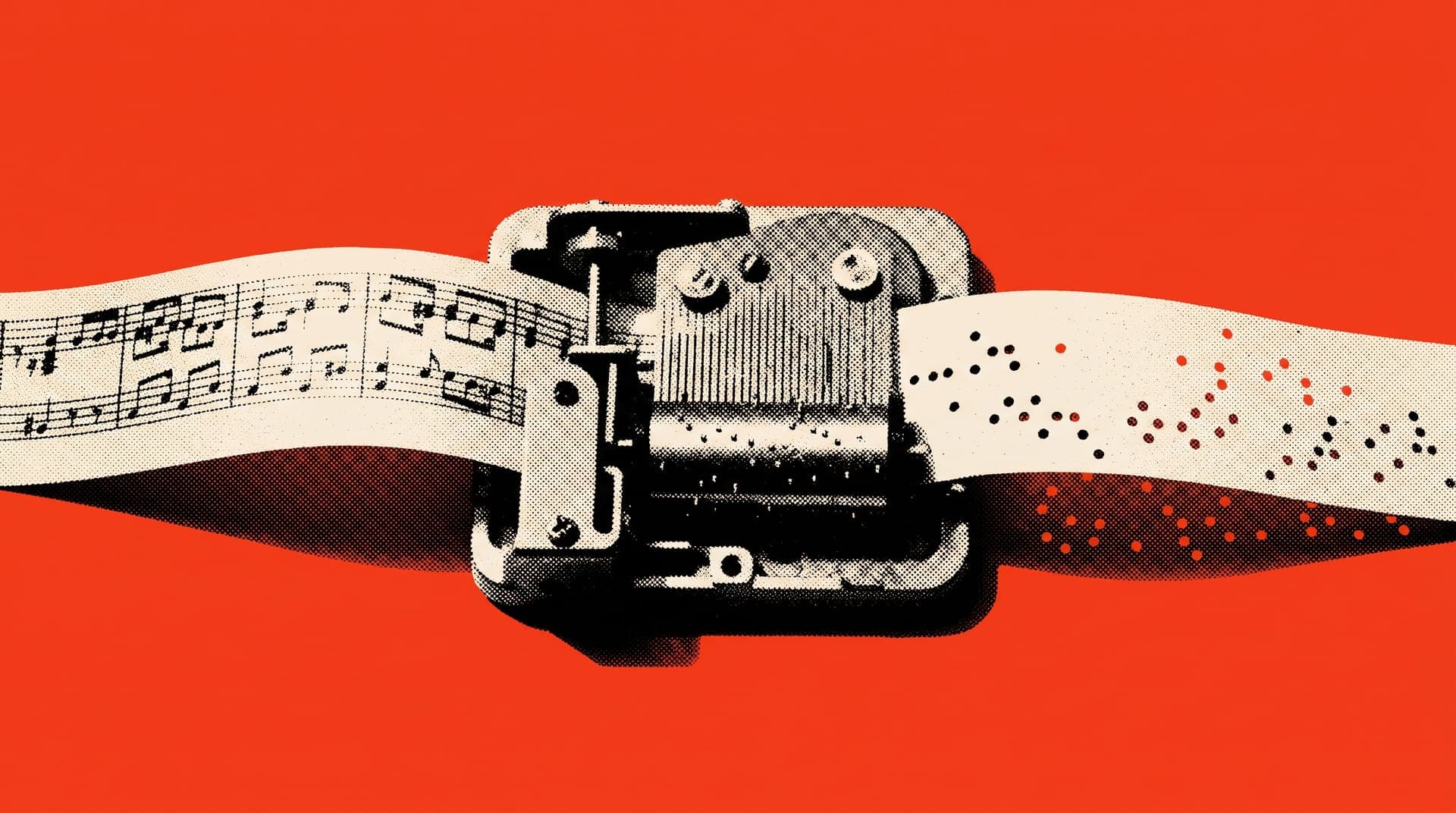
You type a few lines: "melancholy indie rock, female vocal, drums kick in on the chorus." A minute later you're listening to something that sounds like a finished song, with vocals, instruments and lyrics. That's how quick AI song generation is now. What isn't quick is working out what you can do with the result: who owns it, whether you can release it, and where it'll get you into trouble.
Someone drops a link in the band chat: "Got AI to make this in our style. Should we play it?" Sound familiar? It's an innocent question, but there are several questions packed inside it, and this post pulls them apart one by one. For the wider picture of how musicians use AI day to day, see how musicians use AI.
How does AI actually make a song?
These tools work from patterns learned from a huge amount of recorded music. On your side, it comes down to a few fields: a short description of the style, your own lyrics if you want (or lyrics the tool writes), and whether it should be instrumental. The tool gives you a few versions, and you can extend the one you like from a chosen point or regenerate a section. The same prompt gives a different result every time, so most people pick one of several attempts and work from there. Some tools can also split the song into separate tracks like vocals, drums and bass.
The result sounds like a finished recording, but most of the time it's a sketch. You'll hear lyric lines that don't quite make sense, odd vocal phrasing, and joins between sections that don't flow. With lyrics in other languages, it's worth listening closely to whether the stresses and syllables land in the right place.
Who owns a song made on a free plan?
The answer is in each tool's terms, and it varies. Under the terms of Suno, one of the most widely used tools, songs made on the free plan are for personal use only. Commercial use rights come with paid plans, and since September 2026 downloads on the free plan are limited too. Udio, meanwhile, switched off downloads after its deal with a major label.
These terms have changed several times in the last two years and are still moving. Before using a tool for a release, read its terms as they stand that day and keep a screenshot.
Are commercial use rights the same as copyright?
No, and this is where most people get mixed up. Commercial use rights are the tool telling you "you can sell and release this." Copyright is whether the song counts as a work under the law, and who its author is. A tool can give you commercial rights, but it doesn't get to decide whether the song is protected by copyright. Suno's own help pages say music made entirely with AI may not qualify for copyright protection.
In practice: if a song has no copyright protection, someone else can use it too, and it's hard to object.
Can an AI-made song be copyrighted?
The US Copyright Office's 2025 report draws the line like this: writing prompts alone isn't enough for authorship, but parts a human wrote that you can hear in the result, plus a human's selection, arrangement and changes, can be protected. Turkish copyright law defines a work as something that carries its author's personal character, and has no AI-specific rule. The general view among lawyers there is the same: the author has to be a person, and the clearly human parts can be protected. Roughly:
| What went into the song? | Where copyright generally stands |
|---|---|
| Only a prompt, output used as is | Weak or no protection |
| Your lyrics and melody, AI only did the arrangement or demo | The parts you wrote can be protected |
| AI output picked apart, re-played and changed | Protected to the extent of your contribution |
| AI only suggested ideas or rhymes, you wrote the song | Like any other song |
This table is a general direction, not legal advice. If you want to be sure about a song you're releasing, talk to an intellectual property lawyer. Ways to protect songs you've written yourself are covered in how to protect your song.
Will Spotify and other platforms accept an AI song?
Platforms aren't banning AI-made music outright, but they're tightening the rules. Under the policy Spotify announced in September 2025, unauthorized voice clones are banned, a spam filter catches mass and duplicate uploads, and Spotify backs a disclosure standard for saying which parts of a track used AI. Spotify says artists who disclose won't be penalized for it. Uploading hundreds of AI tracks in a short time, on the other hand, is exactly what the spam filter is looking for. Deezer tags fully AI-generated tracks and keeps them out of its recommendations.
Distributors have their own rules too. Most ask you to confirm you hold all rights to the track and ask about AI use during upload. The upload steps are in how to upload music to Spotify.
Why is imitating a famous singer's voice risky?
"Make it sound like that singer" is the fastest way into trouble. Imitating an artist's voice without permission breaks Spotify's rules, and distributors won't accept it either, so you risk takedowns and account warnings. Beyond that, it can raise legal issues around personality and likeness rights. Major labels and rights holders have also sued AI music tools over the last two years. Some of those cases ended in licensing deals, and some are still going.
Where can a band actually get some use out of these tools?
Treating an AI-generated song as a working tool rather than something to release as is gets rid of most of the risks above:
- Making demos of your own lyrics in different styles to pitch an idea to the band
- Hearing "what if this one were faster?" before rehearsal
- Getting a few directions for a bridge you're stuck on, then writing it yourself
- Hearing how an arrangement idea might sound on an instrument nobody in the band plays
It's also a good habit to keep the drafts, lyric files and recordings that show which parts you wrote. If a question ever comes up, that's the easiest way to show your contribution.
A demo like that is a quick way to get an idea across. In BandUp, members vote like or dislike on a song while it's still an idea, and the songs most of the band likes move into the repertoire. Once the song is in the repertoire, the demo can sit in the group notes as a reference link or file, so everyone turns up to rehearsal having heard the same version.
For stem separation, mastering and audio cleanup, we compare the tools in AI tools for musicians.