
What Is Vibrato? How to Develop a Natural Vibrato
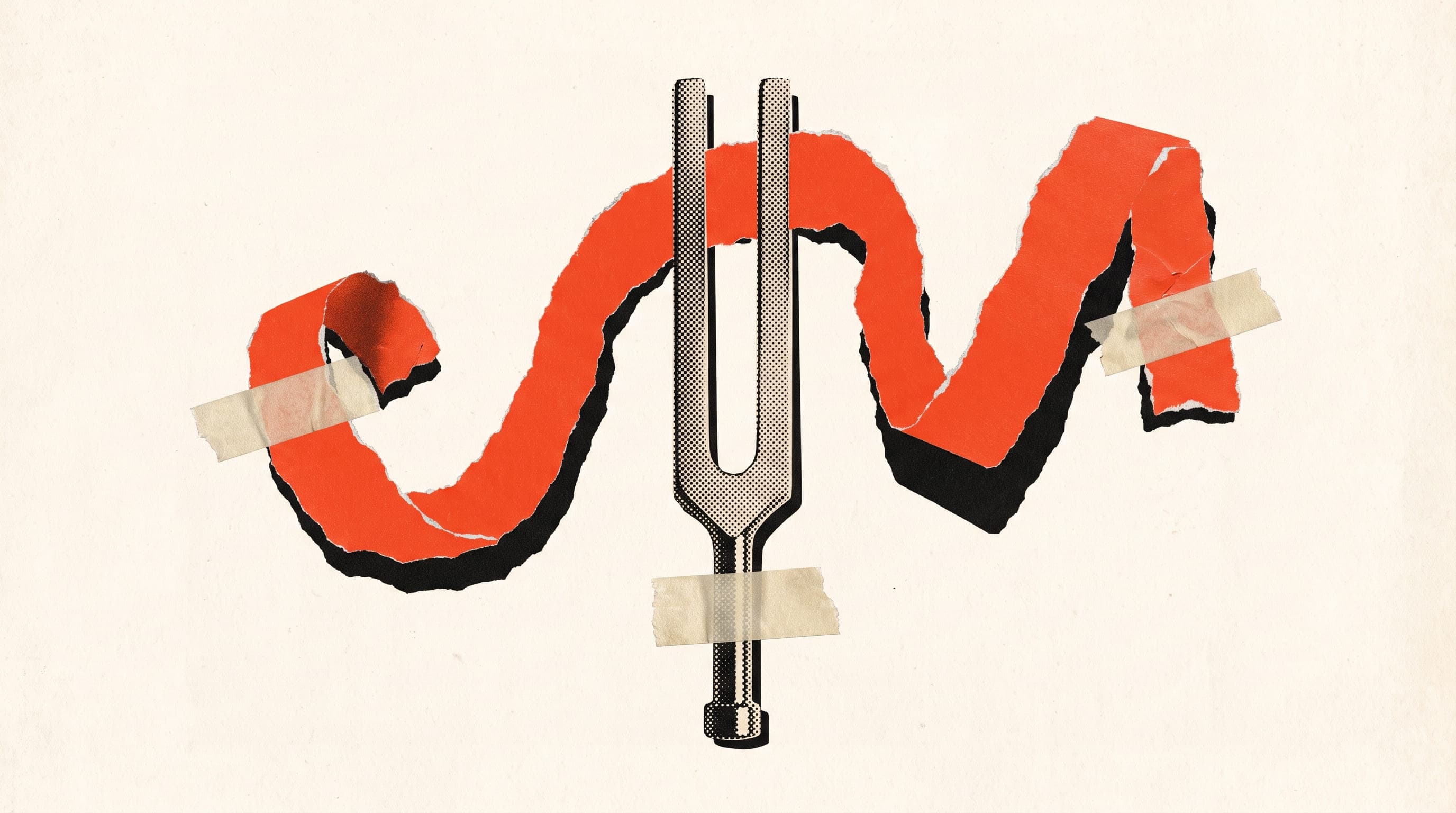
A held note can sit dead flat, or it can shimmer slightly and come to life. That shimmer is vibrato: a small, regular rise and fall in the pitch of the note. The sound wavers, but the note doesn't get lost. Your ear still hears one note, it just sounds alive, as if it is breathing. In singers this wavering happens on its own in the larynx. On string instruments it is made with the fingers, and on winds with the breath or the jaw.
Last note of the chorus. The singer holds it and it sits there dead straight, a bit hard. Someone says "put some vibrato on it". Next take, the jaw starts shaking and the note swings between two pitches. That is not vibrato, that is forcing it. Natural vibrato usually comes from the opposite direction: not from adding something, but from letting go.
How is vibrato produced?
Voice science research links vibrato to a feedback loop between the muscles of the larynx and the nervous system. The muscles that tension the vocal folds are constantly making small corrections, and the delay in those corrections makes the pitch rise and fall roughly five to seven times a second. According to the model by Titze and colleagues, singers develop vibrato out of this small tremor the body already has.
In practice that means vibrato is not an ornament you bolt on. It is something that shows up by itself when the throat is relaxed and the breath is balanced. As tension builds, the oscillation either disappears or goes irregular.
How fast and how wide should good vibrato be?
You can describe vibrato with two measurements: rate, meaning how many times a second it goes up and down, and extent, meaning how far the pitch moves. The figures below are approximate ranges drawn from measurements of classical singers, and they vary by style and singer.
| Sound | Rate (approx.) | Extent | What it sounds like |
|---|---|---|---|
| Vibrato | 4.5 to 6.5 per second | Roughly a half step | Alive, warm, one note |
| Wobble | Under 4 per second | Wide | A slow swing between two notes |
| Bleat | Over 7 per second | Narrow | A fast flutter, a bit goat-like |
| Straight tone | Almost no oscillation | None | Steady, clear, flat |
There is an idea that the wider the vibrato, the more emotional it sounds. It isn't true. Past a certain point the note gets vague and the listener can't tell which note is being sung.
Do you force vibrato, or does it come on its own?
Two common tips both cause trouble. The first is "shake your jaw or throat to make vibrato". That adds a tremble from the outside and usually turns into a wobble. The second is "pulse your diaphragm". The diaphragm is not where vibrato comes from. Pushing out the breath in pulses does make the sound shake, but that is a wavering breath, not vibrato.
The path to natural vibrato usually goes like this: first learn to hold a note comfortably and with support, then let that note go. Vibrato tends to arrive with practice and time. It doesn't arrive by force.
When is straight tone the better choice?
A singer without vibrato is not a bad singer. Straight tone can be a deliberate choice. In choirs, views on vibrato range from letting it run free to preferring something close to straight tone, because many voices have to sound like one. Early music and baroque repertoire generally lean towards a straighter sound as well.
In a band you notice it most in harmonies. When two singers hold a long note together and their vibratos wobble at different speeds, the chord goes blurry. At rehearsal we solve it with a simple rule: on long notes one voice holds straight, and the other can open up the vibrato if they want. Finding the harmony part is half the job, blending the two voices on one breath is the other half. A very common approach in pop and rock is to start the note straight and let the vibrato open up towards the end.
What kind of practice helps natural vibrato?
These work best with a vocal coach, because tension is much easier to hear from the outside than in your own voice.
- Lip trills and straw phonation: exercises that keep the mouth partly closed help the vocal folds vibrate with less strain. They double as a warm-up, and our vocal warm-up post has a few examples.
- Going between straight and free: hold a comfortable note completely straight, then let go without doing anything. Listen for whether the oscillation arrives on its own.
- Noticing tension: on a long note, watch what your jaw, tongue and neck are doing. A mirror or a video helps.
- Staying in a comfortable range: start where your voice is most at ease. On high notes you strain for, vibrato is the first thing to go. Our vocal range guide helps you find that comfortable zone.
How do you hear your own vibrato?
Hearing your own vibrato while you sing is hard. Part of the sound reaches you through your head, and your ear is used to it. The easy fix is recording on your phone. Hold a note in a comfortable range for four or five seconds and listen back. Is the wavering regular, or does it speed up and slow down? Does the note stay in one place, or swing between two?
Slowing the recording down is another good trick. At lower speed you hear each wave on its own and any unevenness jumps out. Recording the same note a week apart and comparing is the most concrete way to track progress. Same goes for rehearsal. Listen back to the chorus and you will hear which long notes shake and which stay straight with a clarity you never get on stage.
How is vibrato done on an instrument?
On instruments vibrato is made on purpose, and each instrument has its own way. On violin and cello, the finger, wrist or arm rocks the stopping point gently back and forth. On guitar, the fretting finger bends the string slightly and releases it, or moves along the string. On flute, the airflow is made to waver. On sax, it is mostly the jaw changing pressure on the mouthpiece in a steady rhythm.
The rule is the same as with the voice: vibrato should never blur the identity of the note. A too-wide or uneven instrumental vibrato muddies the pitch just like a vocal wobble does.
When does a shaky voice mean it is time to see an ENT?
Vibrato and vocal tremor are not the same thing. A singer can reduce or suppress their vibrato at will. A tremor caused by a medical condition is involuntary and is often audible in speech too. Essential voice tremor is one known example.
See an ear, nose and throat specialist if the shaking also happens when you speak, if you can't control it, if hoarseness drags on, or if you feel pain while or after singing. Vibrato widening with age can be part of normal ageing, but telling the two apart takes a specialist. None of this is medical advice, just signs that tell you when to pay attention.