
How to Soundcheck: A Step-by-Step Guide for the Whole Band
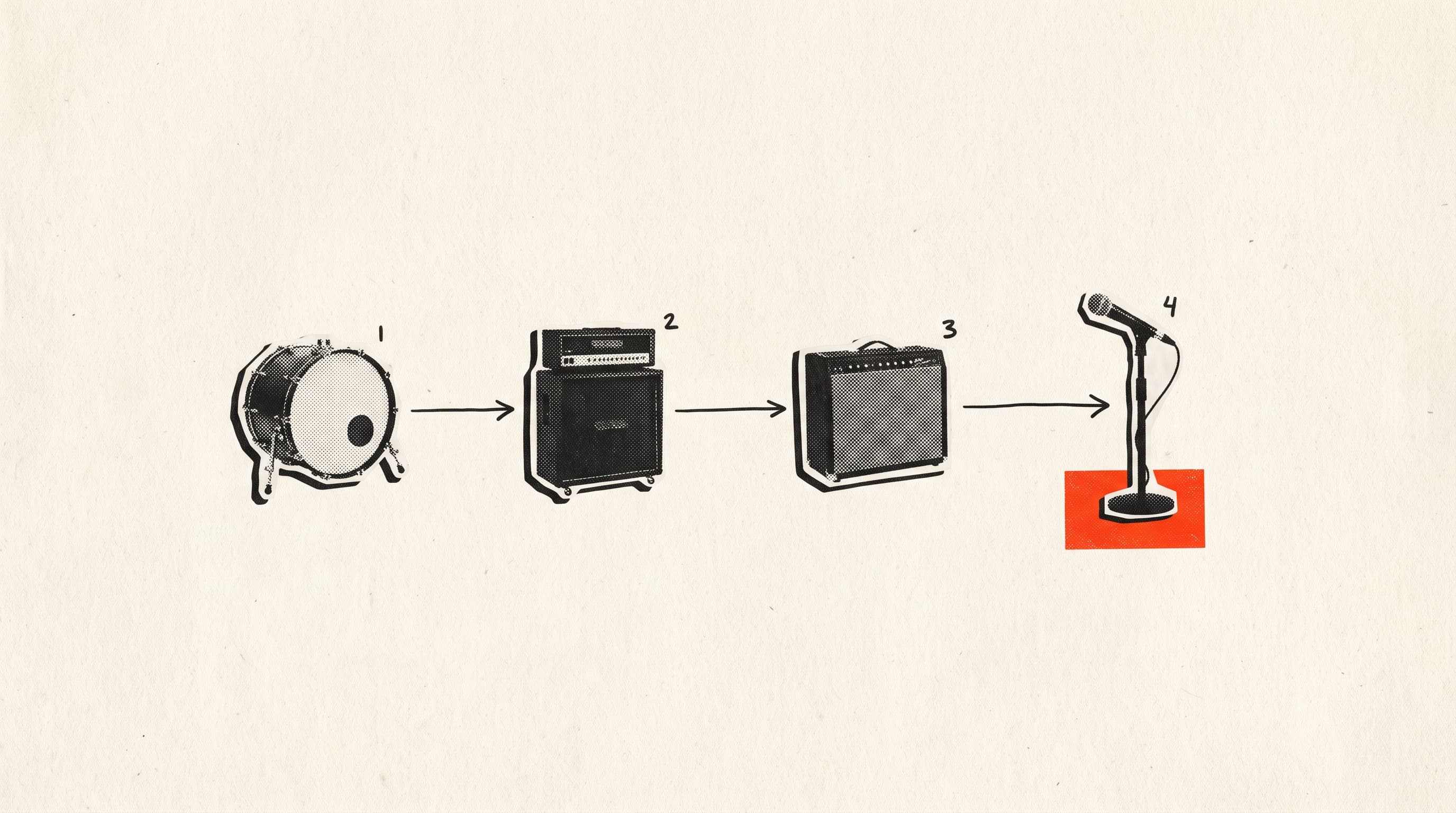
A soundcheck is the check before a show where every instrument and mic on stage gets plugged into the PA and balanced, one at a time. Two things get set: what the crowd hears, and what you hear on stage. They're not the same mix, and both get built in those few minutes.
You walk on stage, everything's plugged in, and the engineer says “kick, please.” The drummer starts hitting, but the guitarist has just switched on the amp and is noodling a riff, the keys player is hunting for headphones, and the singer asks “which mic is mine?” The time you get is short to begin with. Half of it goes on who plugs in where, and in the other half nobody really hears themselves before the first song.
After a few of those, we learned one thing: a good soundcheck doesn't start on stage, it starts the day before. Here's the whole thing in order, from prep to the final check.
Why do you need a soundcheck?
Every venue has its own room, its own PA and its own stage. A guitar that sounds great in the rehearsal room can bury the vocals in a small bar with brick walls. A soundcheck catches that before the doors open.
There are two separate mixes:
- Front of house (FOH): the mix the audience hears from the main speakers. The engineer sets it from the middle or the back of the room.
- Monitor mix: what you hear on stage, from the wedge in front of you or from in-ear monitors. Every player wants something different.
If the FOH mix is bad, the crowd notices. If the monitor mix is bad, the band loses each other, the singer drifts off pitch and the drummer has nothing to lock onto. The second one is usually the bigger problem.
What should you prepare before the soundcheck?
If the engineer has never met you, they're finding out what's on stage for the first time, on stage. The fix is to send the info ahead.
- Input list: which instrument goes into which channel on the desk. Kick, snare, bass, guitar, keys, vocals. Note which ones are miked and which go through a DI box (the little box that connects an instrument straight to the desk).
- Stage plot: a simple drawing of who stands where. The engineer uses it to place the monitors.
- Your own spares: spare cables, strings, batteries, a tuner. A dead cable is the cheapest fault at a soundcheck and the one that eats the most time.
- One quick decision: who talks to the engineer? Settle it in the band beforehand. If roles in your band are still fuzzy, our guide to starting a band covers how to split them.
The input list and stage plot usually travel inside a document called a tech rider. Send it to the venue a few days before the show and the engineer can start setting up before you even arrive.
What order does a soundcheck go in?
The classic order starts with drums and ends with vocals. The logic is simple: the loudest instrument with the most mics gets sorted first, and everything else is built on top of it.
| Order | What gets checked | What you do |
|---|---|---|
| 1 | Drums | Kick, snare, hi-hat, toms and overheads, one at a time. Keep hitting the same thing until the engineer says “okay.” |
| 2 | Bass | A single note first, then play it like the song. Try the highest and lowest parts. |
| 3 | Guitars | The clean and distorted sounds you'll use at the show, one after the other. Show the solo sound separately. |
| 4 | Keys | Every sound you'll use (piano, organ, pads) on its own. This is where level jumps between patches show up. |
| 5 | Vocals | Lead vocal first, then backing vocals. Sing it like the song, don't just talk. |
| 6 | Full band | A section of one or two songs from the setlist. The monitor mixes get finished here. |
Don't pick the full-band song at random. Playing a bit of the loudest song in your set and a bit of the quietest one shows the engineer both ends.
How do you ask for what you need in the monitors?
“A bit more” doesn't tell the engineer anything. Say what you want and in whose monitor: “More vocals in my wedge, a little less guitar.”
A few rules speed things up:
- Take turns. If five people talk at once, the engineer hears nobody.
- Try turning things down first. Everyone wants more of themselves, and before long the whole stage is shouting.
- Stand where you'll stand during the show and listen the way you'll listen while playing.
- If anyone's on in-ears, put it on the input list. Their mix gets built separately.
How do you work with the sound engineer?
For that night, the engineer is part of the band. How the show sounds is in their hands, and they're usually juggling more than one job. The clearer you are, the shorter the soundcheck.
While the engineer works on one instrument, everyone else stays quiet. This is the rule that breaks most often. Even a guitarist quietly tuning up can stop the engineer from hearing the kick. One person talks to the engineer and the others pass their requests through them. For the show itself, agree on a few simple hand signals for the monitors, like pointing up for more and down for less.
What are the most common soundcheck mistakes?
- Playing or tuning when it's not your turn.
- Playing softer than you will at the show. The engineer sets levels for the quiet version, and then everything blows up at the gig.
- Singers talking into the mic instead of singing. Your voice sounds completely different when you sing.
- Cranking the amp on stage. The stage volume spills into the room and the engineer runs out of room to work.
- Touching your settings after the soundcheck. One turn of an amp knob throws off the whole balance.
- Walking off before it's finished. Skip the last full-band run and the monitors stay half done.
What if there's no time for a soundcheck?
On nights with several bands, a full soundcheck is rare. Usually the headliner gets one and everyone else gets a line check. A line check is a quick pass through each channel to make sure signal is coming through. It's not about balance, just “is anything coming out?”
That's when the prep matters even more. If the input list went ahead, the engineer sets up before you. If you know your own amp and pedal settings, you're not guessing on stage. And opening with a song that starts quiet gives the engineer a minute or two to catch up.
What should you do after the soundcheck?
Write your settings down. Even a quick photo of your amp knobs helps. Next time you play the same venue, or a similar stage, you'll remember what you changed. Go over the final setlist with everyone once more and hand the engineer a copy too. If they know which song has a keys patch change or where the second guitar drops out, they stay one step ahead all night.
BandUp moves part of this prep into the band's shared space. The tech rider builds itself from your lineup and instruments, stage plot and input list included. You send it to the venue as a single link, no login needed, and it updates itself when the lineup changes. Put your amp settings in a song's personal notes as a setup list, and they're right in front of you in Stage Mode, no menus.
Once the soundcheck is done, the last thing in your hands is the setlist. To build that one properly ahead of time, have a look at our guide to building a setlist.