
Creative Differences in a Band: How to Settle Musical Arguments
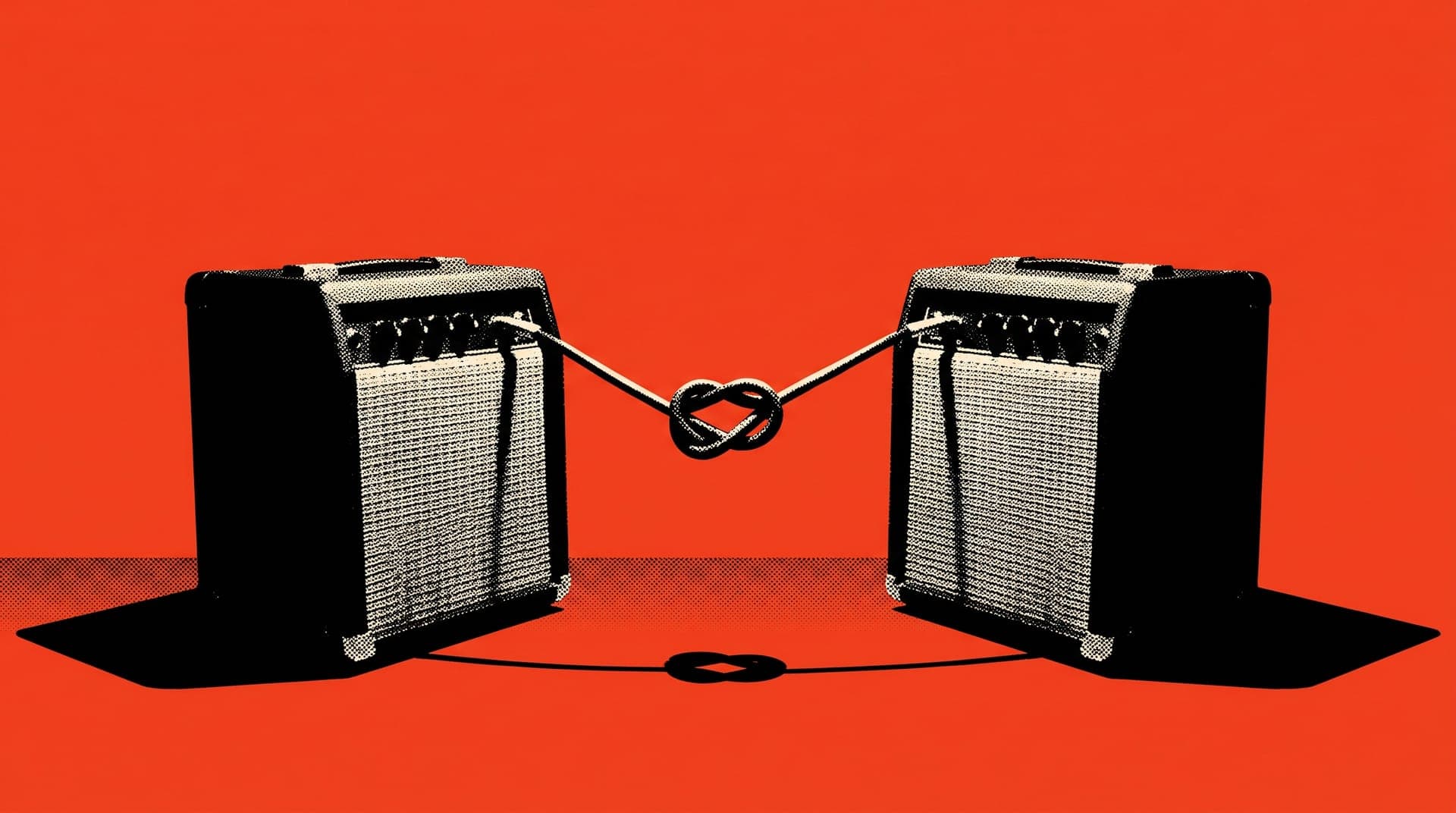
When I talk to bands, musical arguments rarely end up being about music. It starts with whether the bridge should be played once or twice, and half an hour later someone is saying "we always end up doing it your way anyway." A musical disagreement is simply band members hearing different versions of the same song: the tempo, the key, the arrangement, who gets the spotlight where. It happens in every band where more than one person cares about a song. What wears bands down isn't the disagreement itself. It's having no way of settling it.
Here's a scene I hear about a lot. Last half hour of rehearsal. The guitarist wants a long riff at the top of the new song. The singer wants the intro short so the crowd recognises the song from the first line. Both play their version a few times while everyone else stands around holding their instruments. Time runs out, the room is packed up, and the song leaves without a decision. Next rehearsal starts from exactly the same spot.
Where do band arguments usually start?
Most of the arguments bands describe fall into a handful of buckets. It helps to tell them apart, because each one gets solved differently.
- Tempo: how fast the song goes, measured in beats per minute (BPM). The drummer wants the record's speed, the singer wants room to breathe.
- Key: the note the song is built around. It usually follows the singer's voice, but on some instruments a key change means relearning the fingering.
- Arrangement: who plays what in each section, how long the intro is, whether there's a solo at all.
- Sound: how dirty the guitar should be, which keyboard patch to use, who's too loud on stage.
- Repertoire: which songs make the set and which get dropped.
That last one is its own topic and the classic cover band fight, so we covered it separately in how to choose cover band songs. This post is mostly about how a song gets played.
Is this argument actually about the music?
Some arguments start with music but sit on top of something else. Someone who showed up unprepared might push to simplify a section. Someone who feels they've lost the last three calls might dig in on the fourth. There's an easy way to check: pause for a minute and ask, "which of these two versions does the song more good?" If the answers aren't about the song, the problem is somewhere else.
That matters, because trying to fix a non-musical problem with musical tools just burns time. Lack of preparation gets fixed with a rehearsal routine. Feeling unheard gets fixed with decision rules everyone agreed to in advance.
Do creative differences mean the band is in trouble?
Usually the opposite. Two people arguing over a song are two people who care how it sounds. The picture that worries me more when I talk to bands is the one where nobody ever objects to anything. Usually that means one person decides everything while the others quietly play along, or someone has already checked out. Either way, it tends to come back up later, and louder.
The difference is what the argument is about. "Should the guitar or the keys lead in this bridge?" can push a song forward. "You never listen anyway" is aimed at a person, not the song. You want room for the first and an early warning for the second. It's harder in new bands, because members don't yet know how each other sound when they give feedback. The same sentence can land as a suggestion from one person and an accusation from another. In the early months, bringing an idea as "can we try this?" causes far less friction than "that doesn't work".
How do you choose between two ideas?
What works best is moving the argument out of talking and into playing. The routine I hear from bands has four steps:
- Both versions get played at least once, start to finish, with everyone giving it their best. A half-hearted version always loses, so "both get a real shot" is agreed up front.
- Both get recorded. No fancy setup needed, a phone in the middle of the room does the job.
- Everyone listens back the next day, on their own. What you hear while playing and what you hear while listening are often two different things.
- The call gets made at the start of the next rehearsal, in five minutes. Everyone gives their pick in one sentence.
This does two things. The argument doesn't eat the rest of rehearsal, and nobody walks out feeling like they lost, because the decision isn't made in the heat of the moment but a night later. A time limit helps too: give any one argument ten minutes of rehearsal, max. When time's up, both versions get recorded and the topic moves to next week. We go into recording and reviewing in more detail in how to record band rehearsals.
Who should have the final say?
Bands that need everyone to agree on everything have the longest arguments. The ones that argue less have handed out decision rights ahead of time. That doesn't mean picking one leader. It means agreeing who owns which call. The setup bands most often land on looks something like this:
| Topic | Who decides? | Why? |
|---|---|---|
| Key | The singer | They're the one who has to sing it. Everyone else adjusts their fingering. |
| Tempo | Drummer and singer together | The drummer holds the tempo on stage, the singer has to breathe in it. |
| Your own part | Whoever plays it | Others can suggest, the call stays with them. |
| Arrangement of an original | Whoever brought the song | They heard it first. The band contributes, they have the last word. |
| Which songs get played | The whole band | If everyone plays it, everyone signs off on it. |
Your table doesn't have to look like this one. What matters is that it's written down before the argument starts. If your band has never talked about who does what, band roles and responsibilities is a good place to begin.
When does a band vote help, and when doesn't it?
Voting looks like a quick fix, and for some decisions it is. Should this song go into the repertoire, do we take a break in the set, which song opens the show: when a question affects everyone equally, majority rule works fine.
When a question directly affects one person's part, voting backfires. Four people outvoting the bassist on their own bass line turns the bassist into someone with no say over what they play. Four-piece bands have a tie problem too: a two-two split settles nothing. Before you vote, answer two questions. Does this decision affect everyone equally? And what happens if it's a tie? Some bands give the tiebreak to whoever brought the song. Others play one version for a gig and then talk again.
What if the argument gets personal?
The moment voices go up and sentences start with "you always", the musical argument is over. Playing on or talking on rarely helps from there. The habits bands tell me actually work:
- Drop it for today and put it at the top of next rehearsal's list.
- Keep the conversation face to face, not in the group chat. Tone gets lost in text, and a short reply reads harsher than it was meant.
- Separate the idea from the person: say "version A", not "your idea".
- If there's a grudge that's been building for a while, give it its own conversation instead of squeezing it into rehearsal.
Sometimes there's a genuinely big gap underneath: one person wants the band to head somewhere new, another wants it to stay put. That won't be solved in one song. For talking through the band's direction and what happens if someone leaves, see how to write a band agreement.
How do you make sure a decision sticks?
The most common reason a settled argument comes back is that the decision was never written anywhere. Two weeks later someone asks "didn't we make the intro longer?" and everyone remembers something different. Jotting two lines next to the song the moment you decide stops that: what you decided, and why. Something like "Intro is four bars so the crowd knows the song from the first line" is enough. A bar is the small unit beats are grouped into, and four bars go by in a few seconds in most pop songs.
BandUp keeps those decisions in the band's shared space. When a new song idea comes in, members vote it up or down, the songs most people like go into the repertoire with one tap, and the rest get archived. A decision written in the song's band notes is visible to everyone, and the rehearsal recordings of both versions can sit in that song's references as a link or a file. So the answer to "which version did we settle on?" lives in one place.
That note shouldn't live on one person's phone. It belongs somewhere the whole band can see it, so a new member or a dep filling in for one night plays the same version too.