
Saxophone, Clarinet or Flute? Which Wind Instrument Should You Start With?
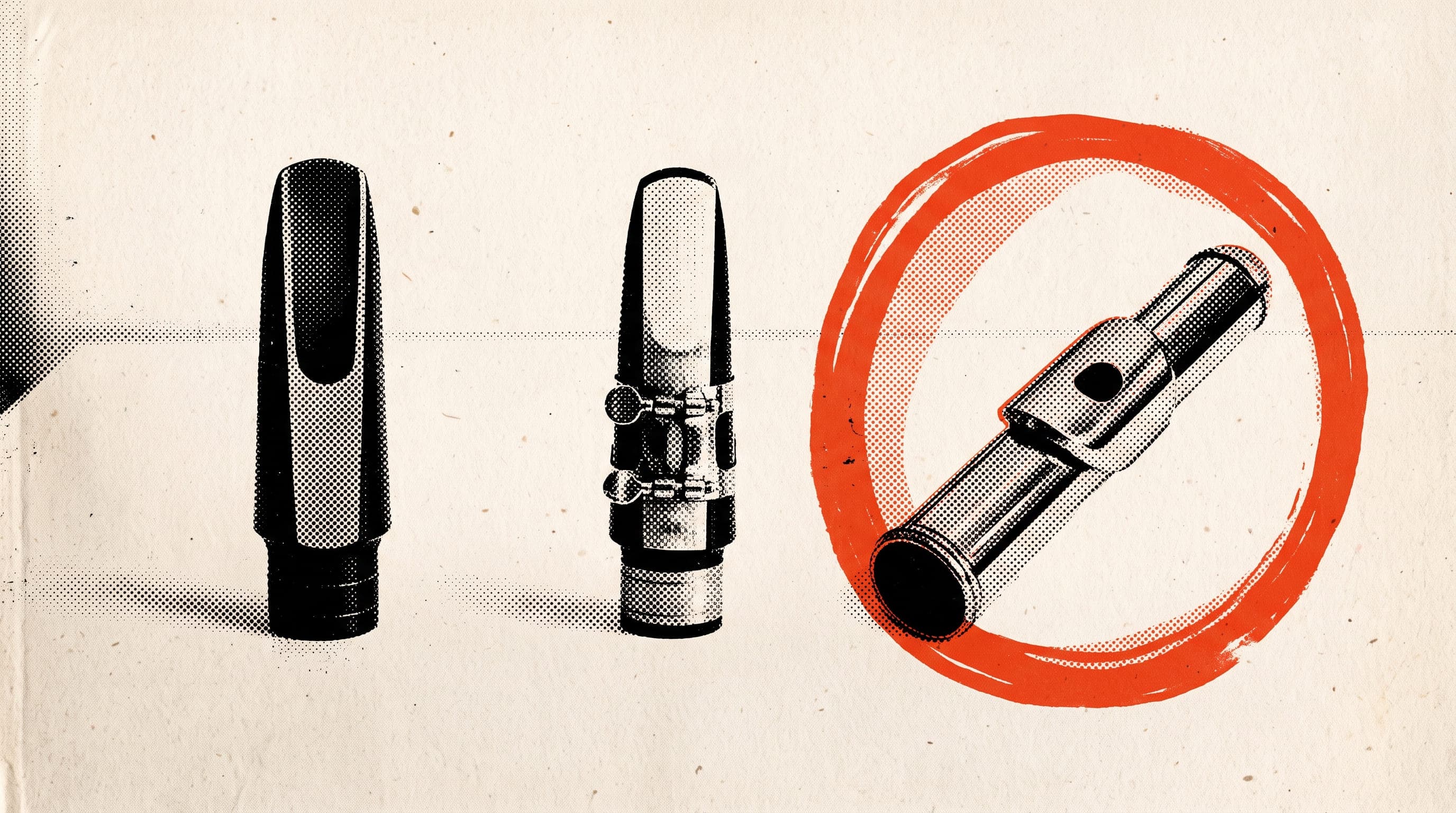
Saxophone, clarinet and flute belong to the same family: all three count as woodwinds, even though the sax is made of metal. Where they differ is where the sound starts. On sax and clarinet, a thin reed attached to the mouthpiece vibrates. The flute has no reed at all. You blow across the edge of a hole, and the air splitting on that edge makes the sound. Which one to start with depends a lot on how that difference suits you.
Picture this. For years you have been the one in the crowd listening to the sax part, and now you want to play it yourself. You are starting as an adult, time is tight, you live in a flat, and one day you would like to join a band. Those four things change which instrument will get you there fastest and with the least friction.
Where does the real difference between the three begin?
It starts in your mouth. The shape your lips, jaw and face muscles make around the instrument is called the embouchure, and it is different for each of the three. The table puts the main differences side by side.
| Instrument | How the sound starts | Key | Where you often hear it |
|---|---|---|---|
| Alto sax | Single reed, mouthpiece | E flat (Eb) | Pop, soul, funk, ska, jazz |
| Tenor sax | Single reed, mouthpiece | B flat (Bb) | Rock, blues, jazz, funk |
| B flat clarinet | Single reed, mouthpiece | B flat (Bb) | Classical, early jazz, klezmer |
| G clarinet | Single reed, mouthpiece | G | Turkish music, fasıl, Roma music, weddings |
| Flute | No reed, you blow across the hole | None, it is in C | Classical, Latin, jazz, film music |
The genres are common pairings, not rules. Flute turns up in funk bands and clarinet in rock bands too.
Which one gives you a first note fastest?
Most teachers say the first note comes quicker on sax and clarinet than on flute. The reed is ready to vibrate, so once your mouthpiece position is roughly right you get a sound, even if it is not a pretty one. On flute, a tiny change in the shape of your lips or the angle of your breath can kill the sound completely. Getting nothing but air for the first few days is very common.
That doesn't make the flute harder overall. The hard parts just show up at different times. On sax the first note comes fast, but a clean, in-tune sound takes a while. On clarinet, moving from the low register to the high one is the big hurdle of the first months. And one warning: the recorder you played at school and the flute are very different instruments. Knowing one won't get you a first note on the other.
B flat, E flat, C: why does transposing cause trouble in a band?
Sax and clarinet are transposing instruments. Play a written C and a different pitch comes out. A B flat clarinet sounds a whole step lower than written. An E flat alto sax sounds a major sixth lower, and a B flat tenor sax sounds an octave plus a whole step lower. The flute plays exactly what is written.
On your own you rarely notice, because your sheet music is already written for your instrument. The trouble starts in the band. The guitarist says "it's in C", the sax player plays in C, and it sounds wrong. Until the band agrees whose C they mean, the same mix-up happens at every rehearsal. Bb and Eb instruments in a band and transposing itself are the two places to start.
Which music calls for which instrument?
If joining a band is the goal, the music you want to play may be the biggest factor.
- Pop, rock, funk, soul, ska: sax is the horn you hear most. Alto is brighter and nimbler, tenor is thicker and beefier.
- Jazz: there is room for all three, sax most of all. Clarinet is tied to early jazz, sax to the eras that followed.
- Turkish music, fasıl, weddings: clarinet, especially the G clarinet. Sax and flute are much rarer in this repertoire.
- Classical and chamber music: flute and clarinet are permanent orchestra members. Sax shows up less in classical repertoire.
Playing Turkish music? Which clarinet should you get?
In Turkey, the clarinet sound most people know is the G clarinet. It is longer than the B flat clarinet common in Western music and has a darker tone. It is the instrument of fasıl, Roma music and wedding bands. For classical, jazz or Western pop, the B flat clarinet is the better place to start.
Switching between the two is possible, since the fingerings are similar. Still, thinking about where you are heading before you buy can save you from buying a second clarinet later. It is also worth asking which one your teacher teaches on.
Reeds, cloths, straps: what does maintenance involve?
On reed instruments, the reed is a consumable you keep replacing. The flute has no such running cost. The basic habits for reed instruments:
- Rotate between a few reeds instead of wearing one down to nothing.
- Take the reed off after every session, let it dry and store it flat. A reed left wet on the mouthpiece warps at the tip.
- Start on a soft reed. A reed that is too hard makes it tough to get any sound, which is how a lot of beginners give up.
- Swab the inside of the instrument after every session. This one applies to all three.
The sax is the heaviest and bulkiest of the three. You play it on a neck strap, and carrying it in its case is a job in itself. The flute is the lightest and fits in a backpack.
How do you practise in a flat without upsetting the neighbours?
The sax is usually the loudest of the three and the one that gets the most complaints. Mutes exist for sax, but they don't make it silent and they change how it feels to play. Clarinet and flute are quieter, but they still come through walls.
Keeping practice outside the hours your neighbours care about, playing in short, frequent sessions and choosing a room away from a shared wall all help. Short sessions are good for more than the neighbours, too. Your lip and face muscles tire quickly in the first weeks, and a few short sessions a day do more for your embouchure than one long, forced one.
Once you are in a band, you don't have to transpose every song in your head. In BandUp, a member who plays a B flat or E flat instrument can use personal transpose to shift the chords on their own screen only. The song's saved key for the band and the chords everyone else sees stay the same. The setting is saved to your account, so you don't have to redo it song by song.
So how many minutes a day is enough for a new wind instrument?