
What Is a Looper Pedal? Building Songs Layer by Layer
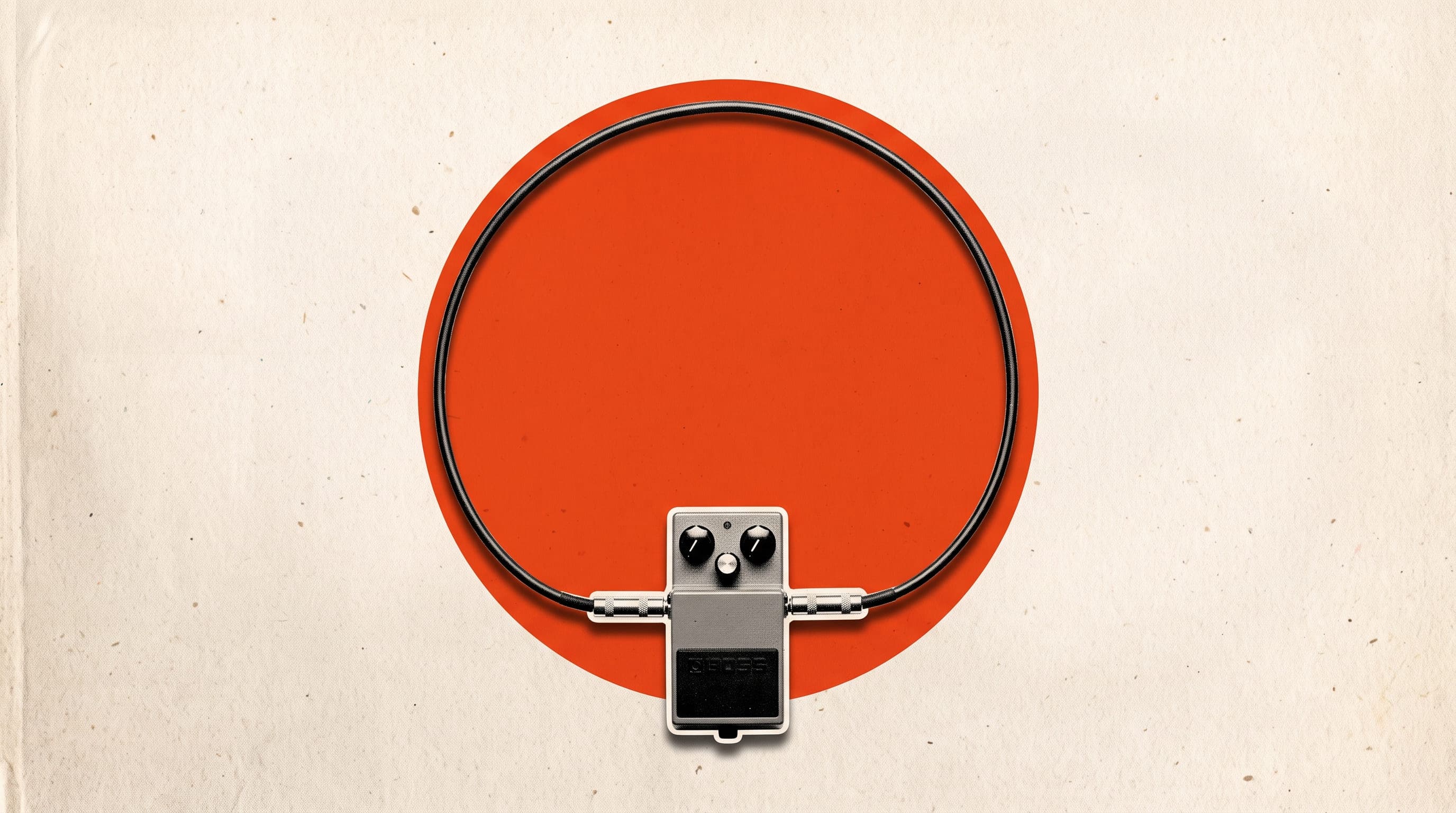
One person on stage, and behind them chords, a bass line and a rhythm are playing. The box doing it is a looper pedal: it records a section you play and, the moment you finish, starts repeating it without a gap. While the loop runs you can stack new layers on top. That is how a musician builds their own backing live, in front of the audience: chords first, then a bass line, then a rhythm tapped on the body of the instrument, and finally the melody.
I play a four-bar chord progression and hit the pedal at the end. The loop starts. On the second pass I realise I stomped half a beat late. There is a tiny gap at the end of the loop, and it lands in the same place every time round. Whatever I play on top, that stumble is still there. The first thing you learn on a looper is hitting the pedal right on time.
How does a looper pedal work?
Button layouts vary between models, but the basic moves are almost always the same:
- Record: press the pedal and recording starts.
- Play: press again, recording stops and the loop starts playing straight away. The loop is as long as the time between those two presses.
- Overdub: press again while the loop plays to add a new layer. The new layer loops at the same length.
- Undo: removes the last layer and keeps the ones underneath. Many units can bring it back with redo too.
- Stop: silences the loop. On some pedals you double-tap or hold to do this.
Everything depends on the length of the first loop. Every layer you add has to fit inside it. That makes the first take the most important one. Short, clean and in time is the foundation everything else sits on.
What is the trick to closing the loop on time?
Hit the pedal not on the last beat of the loop, but on the first beat of the next pass. If you are playing four bars, that is the "one" of bar five. Counting in your head is a must: one, two, three, four. Your foot usually lags a little behind your hands, so press just ahead of the beat.
Practising with a metronome at home speeds this up. Turn it on, play four bars and hit the pedal. Listen to the loop against the click. If they drift apart, your timing was off. If you already practise with a metronome, this step goes quickly. Some loopers have built-in rhythms or a click, and some snap your press to the nearest beat. Handy, but no substitute for training your ear.
Is a looper only for guitar players?
People think guitar first, but a looper records whatever you feed it. Keys, bass, violin or an electronic instrument all work. Some models have a mic input, and singers use them to stack their own voice into harmonies: a sung chord on "ooh" for the first layer, a rhythmic syllable for the second, the lead melody on the third.
It is a great tool for bass players too. Loop a bass line and practise soloing or chord tones over it, and solo practice gets a lot less dull. Whatever you play, watch your input level. A loop recorded too quietly brings its noise up with it when you turn it up later.
What does a looper give you at a solo gig?
For a solo player, a looper is like bringing a second musician on stage. On an acoustic night, playing the first half of a song with a simple part and adding a layer going into the chorus makes the song feel like it is growing. Watching the layers go down becomes part of the show.
The risks go up on stage too. One wrong layer runs through the whole song. So have an escape plan before you go on: know how to kill the loop with one press, and keep a volume pedal after the looper or a volume knob within easy reach. At high volume, especially with a distorted loop running, feedback becomes a risk. That is why the loop belongs in your soundcheck too.
Does a looper work when you play with a band?
In a band, a looper cuts both ways. The loop waits for no one. If the drummer pushes or pulls the tempo, the loop stays put and the band and loop drift apart. There are two ways round it. Either build the loop before the drummer comes in and make it the tempo reference, or sync the looper to the click the drummer uses. Both need trying at rehearsal. Neither is something to attempt for the first time on stage.
You also need to agree who decides what. Who starts the loop, who ends it, and when do the drums come in? We sort it out song by song: whoever has the looper also counts in, and signals the last pass of the loop with a nod or a look. That way everyone lands on the same "one" and nobody is guessing when the loop will stop.
At rehearsal a looper has another use: capturing ideas. Loop a riff or a progression and everyone tries out what to play over it. The loop keeps going as long as you like, and nobody has to ask "can you play that again?". Building a song skeleton like this works well in the early stages of writing a song.
What features should you look for in a looper?
Model names aside, a handful of features separate one looper from another:
| Feature | What it does | Who needs it |
|---|---|---|
| Single or multi-track | Run several independent loops and switch them on and off | Anyone building separate verse and chorus loops |
| Undo | Remove the last layer and save the loop | Everyone, especially on stage |
| Memory | Save loops and call them up later | Players who bring prepared loops to gigs |
| Built-in rhythms or click | Keep the loop in time | Solo practice |
| Mic input | Loop vocals directly | Singers |
| Stereo in and out | Keep stereo effects and keyboards intact | Keys players, stereo effect users |
| Sync (MIDI) | Lock the loop to a click or other gear | Anyone using a looper with a band |
Where it sits in your pedal chain matters too. The looper usually goes at the end, after your effects. That way the loop repeats with the effects you recorded it with, and you can change effects for the part you play on top.
Where do beginners go wrong most often?
- Recording a first loop that is too long and complicated. A short loop is easier to close and easier to fix.
- Piling on layers. After the fifth one things get muddy and the level creeps up. Every layer needs its own space.
- Never trying undo at home. The stage is not the place to go looking for it.
- Playing over the loop before listening to it. One pass is enough to know whether the timing held.
While you are learning, recording your practice and listening back shows exactly where the timing slips. The simple methods for recording rehearsals work just as well at home.