
Alto or Tenor Sax: Which Should You Start With?
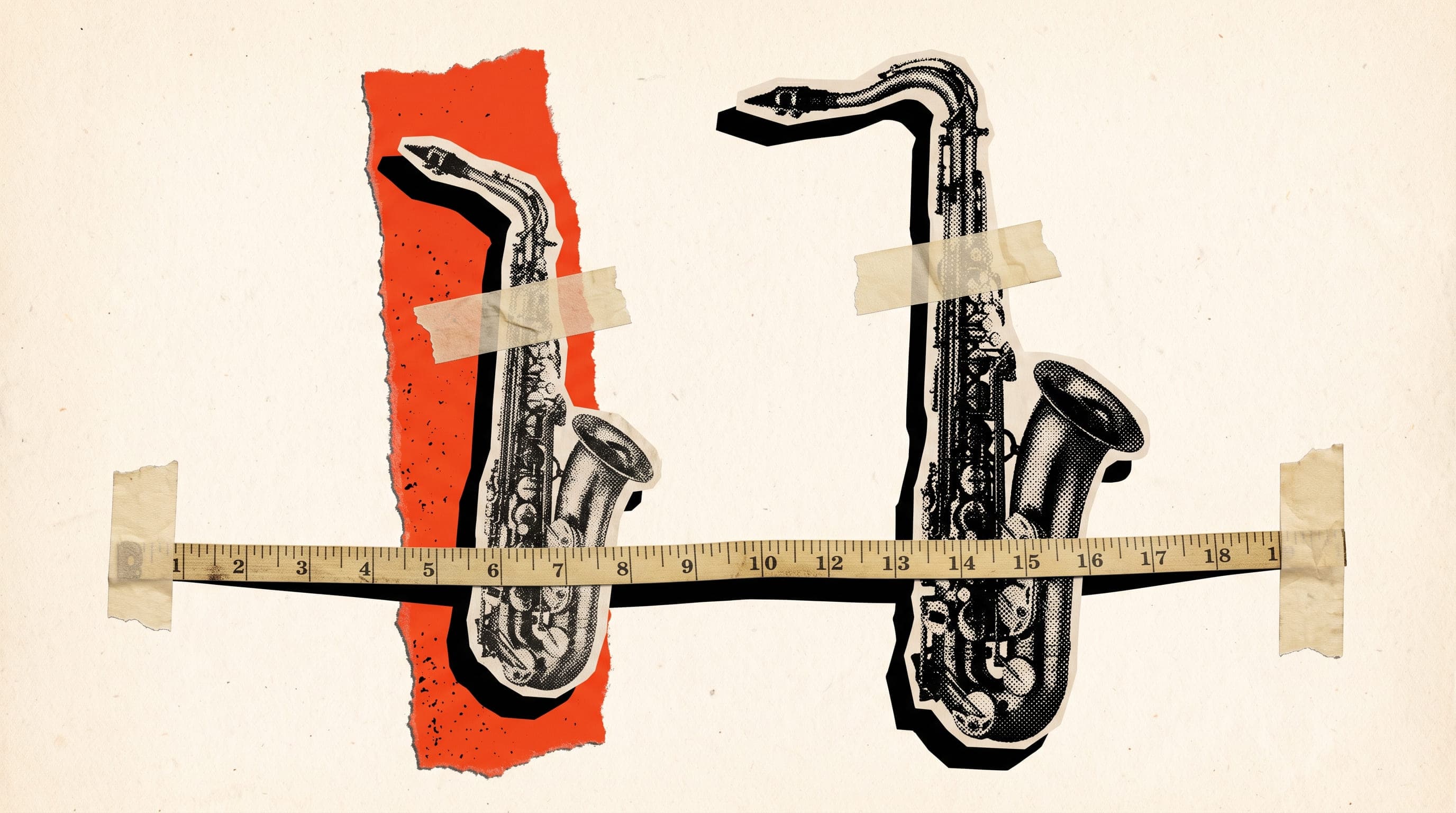
The first question most people ask before starting sax is: alto or tenor? They're from the same family, use the same fingerings, and you can start on either. The differences are in size, weight, how much air they need, their tone and their tuning. The right pick depends on the player's body and the music they want to play.
Two saxophones sit side by side in the music shop. One is smaller and brighter, the other bigger and deeper. The salesperson says "alto's easier to start on." A friend says "every song I love has tenor on it." Both have a point, and deciding takes knowing a bit more than those two lines.
What's the main difference between alto and tenor?
Most of the differences come down to tenor being bigger. The basics:
| Alto | Tenor | |
|---|---|---|
| Tuning | E flat (Eb) | B flat (Bb) |
| Sounding pitch | A major sixth below written | An octave and a major second below written |
| Approx. range (sounding) | D flat 3 to A flat 5 | A flat 2 to E 5 |
| Tone | Brighter, higher | Deeper, warmer |
| Approx. weight, instrument only | Around 2.2 kg | Around 3 kg |
| Approx. weight, in case | Around 5 kg | Around 6.3 kg |
| Mouthpiece and reed | Smaller | Bigger |
| Fingerings | Same | Same |
Weights vary by model, so they're approximate. The last row matters: since fingerings are the same across all saxophones, starting on one and switching later isn't hard. Your first pick isn't a lifelong commitment.
Which one needs less air and strength?
Alto is smaller, so it speaks with less air. It's lighter too, which makes it easier to carry and hold on a neck strap for long stretches. That's the main reason most beginners get pointed to alto.
Tenor needs more air and it's heavier. But that doesn't make it a bad starting point. For an adult with comfortable breath, tenor can be a great start. If you can, try both in a shop or with a teacher. Nothing clears up the decision faster.
How do mouthpieces and reeds differ, and what reed should you start on?
The reed is a thin piece of cane clamped to the mouthpiece that vibrates when you blow and starts the sound. Tenor's mouthpiece and reed are bigger than alto's, so they aren't interchangeable. An alto reed won't fit a tenor, and a tenor reed won't fit an alto.
Reeds are numbered by strength. Beginners are usually told to start soft, around 2 or 2.5. As your tone settles, you can go up half a strength at a time. The right strength depends more on the mouthpiece's tip opening than on the type of sax, so when you change mouthpiece, you may need to try reeds again.
Reeds are made from a natural material, so even reeds from the same box can play differently. Buying a small box instead of a single reed means practice doesn't stop when one turns out bad. Drying a reed after use and keeping it in its holder makes it last longer too.
Which one shows up more in which styles?
Both get used across plenty of styles, but they stand out in slightly different places:
- Jazz: Both are everywhere. Coleman Hawkins' playing in the 1930s did a lot to make tenor one of jazz's lead instruments.
- R&B, rock and pop: Tenor is used a lot. Its thick, warm sound blends well with guitar and vocals.
- Horn sections: In horn sections alongside trumpet and trombone, alto and tenor often play together.
So the best clue is to find out which sax is on the songs you listen to most. The instrument playing the sound you want to make is the one that'll keep you motivated longest. Still torn? A trial lesson or two with a teacher, trying both, is a good way to settle it.
Which suits a child or a smaller player?
Kids usually start sax somewhere between eight and ten. Two reasons: lung capacity and whether their fingers can reach the keys. Almost everyone who starts young starts on alto, because tenor is heavy and its keys are a stretch for small hands.
The same goes for smaller adults. The difference between three kilos and two hanging from your neck is very noticeable after an hour of practice.
Can you start on soprano or baritone?
The family's other two common members usually aren't the first pick. Soprano is a small sax in B flat, mostly with a straight body. Its small mouthpiece makes it hard to keep in tune. Baritone is in E flat and very heavy, so just carrying and holding it is a job. People usually move to either one once the basics are solid on alto or tenor.
What do Eb and Bb mean when you play in a band?
The sax is a transposing instrument: it sounds at a different pitch from the written note. On alto, a written C sounds as the E flat on a piano. On tenor, a written C sounds as the B flat an octave lower. So when the guitarist and keys player play a C chord, the sax player needs to read a different chord in their own part: A on alto, D on tenor.
We go into the details in transposing instruments: Bb and Eb. BandUp's personal transpose is built for exactly this: a band member on sax shifts the chords on their own screen only, and the song's key and saved chords stay the same for everyone else. The preference is saved to the account, so there's no resetting it on every song.
What should you check when buying a used sax?
A used sax is one way to keep the starting budget down. But a sax that looks good can still need serious work. The main things to check:
- Pads: The soft discs that close the tone holes. Are they hard, cracked or dried out? Do they sit centred on the holes?
- Springs: Rusty or broken? Do the keys come back with even tension?
- Neck: Is the curved tube the mouthpiece goes on bent or repaired, and does it seat fully in the body?
- Neck cork: Is the cork where the mouthpiece slides on in good shape, or leaking air?
- Leak test: Shine a light inside the body and look for light escaping around the edges of the pads.
If you're not sure, showing it to a repair tech before you buy lets you see any upcoming costs in advance. For a general checklist, see buying a used instrument.